Care
Bird Droppings, Water Spots and Etching: The 48-Hour Rule for Cape Town Drivers
By Rocco van Wyk · Updated 28 September 2026 · 4 min read
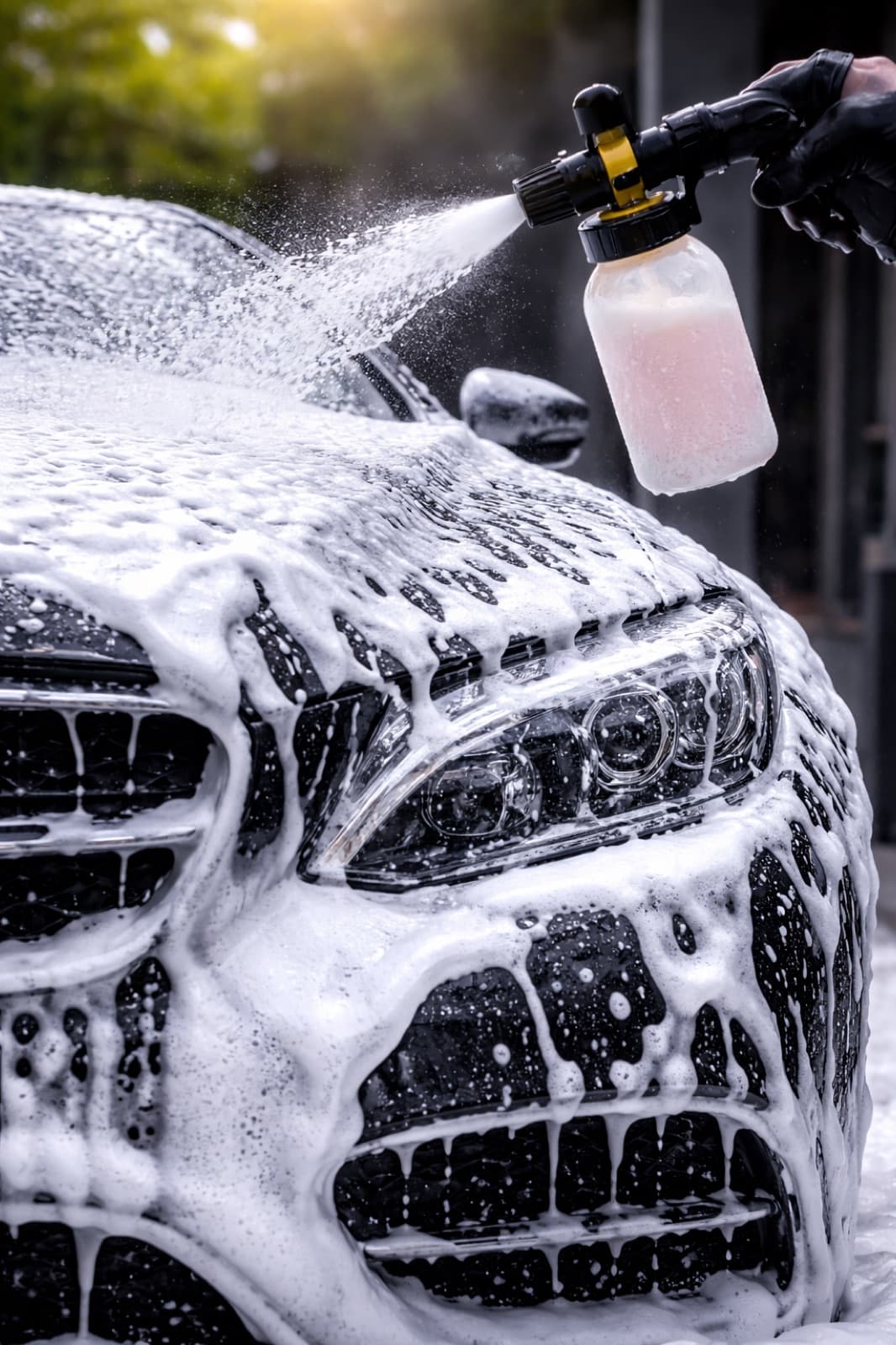
Bird droppings, tree sap and hard water deposits all etch into a car's clear coat — they chemically burn a shallow crater that a wash cannot remove. On hot paint, etching can begin within hours. The practical rule is to remove any of them within 48 hours, and same-day in summer. Once etched, the damage needs machine polishing, not cleaning.
These are the three most common causes of permanent paint damage on an otherwise well-kept car, and all three are almost entirely preventable with a bottle of quick detailer in the boot.
Why are bird droppings so damaging?
Bird droppings are acidic and contain grit. The acid attacks the clear coat directly, and the process accelerates sharply with heat — a dropping baking on a black bonnet in a Cape Town summer is a very different problem from the same dropping on a cool grey car in July. As the dropping dries it also contracts and hardens, so scraping it off later takes clear coat with it.
What results is an etch: a shallow crater in the clear coat, often with a visible outline matching the dropping's shape. It survives washing because there is nothing to wash off. The surface itself has been deformed.
What to do, in the first hour if possible
- Do not wipe it dry. Dragging dried dropping across paint is a guaranteed scratch.
- Soak it. Quick detailer spray or plain water on a folded microfibre laid over the spot for 30–60 seconds to soften it.
- Lift, do not rub. Fold the cloth over the softened deposit and lift it away. Use a clean side of the towel for each pass.
- Rinse the area. Residual acid on the panel keeps working.
- Check in the light. If a dull outline remains after cleaning, it has etched, and it needs polishing.
What causes water spots, and why are they worse in some suburbs?
Water spots form when water evaporates on a panel and leaves behind dissolved minerals — mostly calcium and magnesium. A light spot sits on the surface and washes off. If the panel is hot, or if the deposit is left for weeks, the minerals bond and then etch into the clear coat, leaving a ring that washing will not touch.
Three Cape Town-specific causes come up constantly:
- Garden sprinklers. A car parked in range of an irrigation system gets sprayed daily, and irrigation water is often the hardest water on the property. This is the single most common cause of severe water spotting we see.
- Borehole water. Widely used across Cape Town since the drought years, and typically much higher in dissolved minerals than municipal supply. Washing a car with borehole water and letting it air-dry in the sun does real damage.
- Washing in direct sun. Water evaporates off the panel faster than it can be dried, concentrating minerals exactly where they sit.
Removing water spots
- Fresh spots: wash normally and dry thoroughly, out of the sun. Usually enough.
- Bonded spots: a dedicated water spot remover or a diluted vinegar solution on a microfibre, worked briefly then rinsed off completely. Never leave an acidic solution to dry on paint.
- Etched spots: nothing chemical will fix these — the clear coat surface is deformed. Machine polishing is the only answer. (What paint correction involves.)
What about tree sap?
Sap bonds hard and, once baked in the sun, becomes stubborn enough that people reach for a fingernail or a blade — which is how a minor problem becomes a scratch. Soften it with a dedicated sap and tar remover or isopropyl alcohol on a microfibre, hold it against the deposit for a minute, then lift. Wash and re-protect the area afterwards, since solvents strip wax and sealant.
Worth noting for anyone parking under jacarandas or pines: sap season and bird activity overlap, and the same tree gives you both. (See the Cape Town car care calendar for when each peaks.)
How fast does damage actually happen?
| Contaminant | Safe window (cool weather) | Safe window (hot sun) | If left |
|---|---|---|---|
| Bird dropping | ~48 hours | A few hours | Etched outline needing correction |
| Tree sap | A few days | ~24 hours | Bonded deposit; scratch risk on removal |
| Hard water spot | ~1 week | Same day | Mineral etching into clear coat |
| Insect remains | ~48 hours | ~24 hours | Acidic etching, mostly on the front end |
| Brake dust on wheels | Weeks | Weeks | Pitting and corrosion in the wheel finish |
| Fuel spill on paint | Minutes | Minutes | Strips protection; can stain clear coat |
Does a ceramic coating prevent etching?
It buys time rather than immunity. A coated car resists acidic contamination considerably better, and deposits usually release with far less effort. But a bird dropping left on a coated bonnet through a hot day can still etch the coating, and severe cases can reach the clear coat beneath. The coating changes the deadline from hours to a day or two — it does not remove the deadline. (How coatings compare with wax, sealant and PPF.)
Frequently asked questions
How long can bird droppings sit on car paint before causing damage?
In cool conditions, roughly 48 hours before etching is likely. In direct summer sun on a dark car, damage can begin within a few hours. Treat same-day removal as the standard in summer.
Can etched water spots be removed without polishing?
No. Chemical removers handle mineral deposits sitting on the surface. Once the minerals have etched into the clear coat, the surface has been physically deformed and only machine polishing levels it.
Is it safe to use vinegar on car paint?
Diluted, briefly, and fully rinsed off — yes, for bonded water spots. It is acidic, so leaving it to dry on the panel causes the problem you are trying to fix, and it strips wax and sealant. Re-protect the area afterwards.
What should I keep in the car for emergencies?
A bottle of quick detailer and two clean microfibre towels in the boot. That combination handles a fresh bird dropping in about ninety seconds and has saved more paint than any product on a shelf.
Why do I get water spots even though I wash the car properly?
Usually the drying, not the washing. If the car is washed in the sun, or if the water is from a borehole or a sprinkler, minerals concentrate on the panel as it dries. Wash in shade and dry with a clean microfibre immediately.